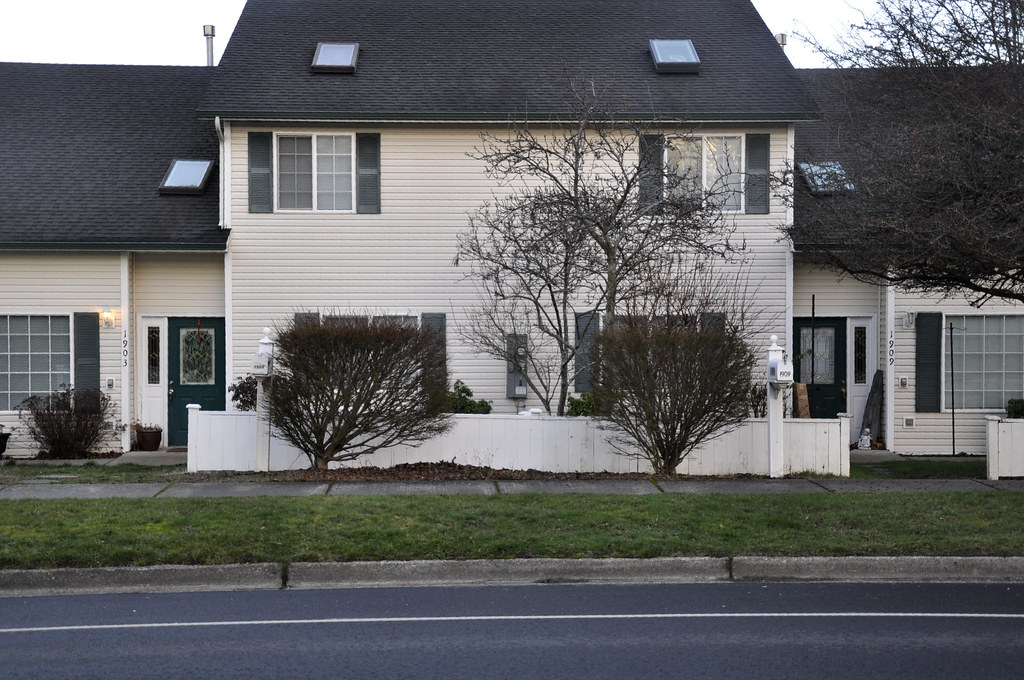
House hacking gets a lot of content written about how to start one. Almost none of it covers the harder decision: when and how you exit the house hack once it’s done its job. Here’s how to think about the move-up, not just the move-in.
What “done its job” actually means
A house hack has usually done its job once one or more of these is true: you’ve captured 2 of the last 5 years living there (so the Section 121 primary-residence exclusion is still available), your equity position lets you buy the next place without PMI, or the property’s rent-to-mortgage math works better as a straight rental than as your primary residence with roommates or tenants covering part of the note. Once you’re staying purely for the tax exclusion clock and not because the numbers still favor owner-occupancy, you’re on borrowed time, not building wealth.
Option 1: Sell and use the Section 121 exclusion
If you’ve lived in the property as your primary residence for at least 2 of the last 5 years, up to $250,000 of gain ($500,000 married filing jointly) is excluded from capital gains tax on sale. This is the cleanest exit if your house-hack property has appreciated meaningfully and you don’t want to keep operating it as a landlord long-term. The catch: multi-unit house hacks only get the exclusion on the unit you actually occupied, prorated by square footage or unit count — the depreciation you claimed on the rented units is still recaptured at sale regardless of the 121 exclusion on your own unit.
Option 2: Keep it as a rental, refinance to pull equity for the next place
Instead of selling, a cash-out refinance on the house-hack property lets you extract equity (typically up to 75-80% loan-to-value on a now-non-owner-occupied refinance) to fund the down payment on your next primary residence, while keeping the original property as a straight rental. This avoids triggering any capital gains event and keeps the depreciation shelter running, but you’re now carrying two mortgages and taking on landlord responsibilities on the first property without living on-site to manage it directly — budget for either self-managing remotely or paying a property manager (commonly 8-10% of collected rent) into your rental math before assuming the numbers still cash flow.
Option 3: 1031 exchange into a larger rental
If the house-hack unit you occupied is a small share of the property (say, a fourplex where you lived in one unit), a 1031 exchange can defer capital gains on the investment-use portion when you roll the proceeds into a larger rental property, while you’d still owe tax normally on the owner-occupied portion (or apply Section 121 to that share instead). This path only makes sense if you’re committed to staying a landlord long-term — a 1031 exchange requires identifying a replacement property within 45 days and closing within 180 days, which is a tight timeline if you haven’t already scouted your next deal.
Comparison table
| Exit path | Tax treatment | Keeps you a landlord? | Best when |
|---|---|---|---|
| Sell (Section 121) | Up to $250k/$500k gain excluded | No | You want out of landlording entirely |
| Cash-out refinance, keep renting | No taxable event | Yes | Property cash flows well without you living there |
| 1031 exchange | Gain deferred, not eliminated | Yes (bigger property) | You want to scale up, not cash out |
FAQ
Do I lose the Section 121 exclusion if I move out before the 2-year mark?
Yes, in full, unless you qualify for a partial exclusion under specific hardship exceptions (job relocation over 50 miles, health, or certain unforeseeable circumstances) — those are prorated, not full exclusions.
Can I combine a 1031 exchange with the Section 121 exclusion on the same property?
Yes, on a property with mixed owner-occupied and rental use, but the two exclusions apply to different portions of the gain and the accounting gets complex enough that this is worth a CPA’s time, not a DIY tax return.
Is refinancing or selling better if I’m not sure I want to be a landlord long-term?
Sell. A cash-out refinance only makes sense if you’re confident you want the ongoing landlord obligations; if you’re on the fence, the transaction costs of refinancing twice (once now, again if you sell later) outweigh the benefit of deferring a decision you were probably going to make anyway.
Verdict
Don’t let the house hack become a default decision by inertia. If you’re only staying past year two to hit the Section 121 clock and the numbers as a straight rental don’t excite you, sell and take the exclusion. If the property cash flows well as a rental and you want to keep building a portfolio, refinance or 1031 rather than selling and losing the depreciation position you’ve already built up.